A history of Flinders Street Station and its evolution to art space
Discover the stories, hidden by peeling paint, in Flinders Street Station’s hidden upper levels.
Published : Sun, Feb 23, 2025
Last updated : Mon, Nov 24, 2025

One of Melbourne’s most storied public spaces, the upper level and ballroom at Flinders Street Station, remained hidden for over two decades.
The space was first reopened to the public in 2021, for RISING’s debut exhibition, Patricia Piccinini’s A Miracle Constantly Repeated. The exhibition transformed its rooms into a nurturing ecosystem of hyper-real imagined creatures and futuristic environments. In 2022, Rone then took the building back in time, to an imagined past of Melbourne, for his immersive exhibition, Time. RISING again staged exhibitions in 2023, the First Peoples' exhibition Shadow Spirit, and 2025, the interactive, feminist art exhibition Swingers—the Art of Mini Golf.
But before Flinders Street Station became a public art space, embedded in the walls’ peeling paint is a history of community and cultivation.

Views of VRI Apprentices 1935, On Top of Flinders Street Station Roof. Via PUBLIC RECORD OFFICE VICTORIA
For many people, a big part of their exhibition visit is seeing Flinders Street Station’s folkloric ballroom. But the ballroom is just one of ten rooms on the station’s third floor inhabited by artworks. Level 3 opened in the early 20th Century as an extension to the headquarters of the Victorian Railway Institute (VRI).
Upon opening, the new level provided improved facilities and activity rooms for railway employees, but they also came with an ulterior motive.
The new facilities were created, in part, as a response to railway strikes in 1903, with the intention of counteracting the influence of trade unions and fostering a “corporate culture”.
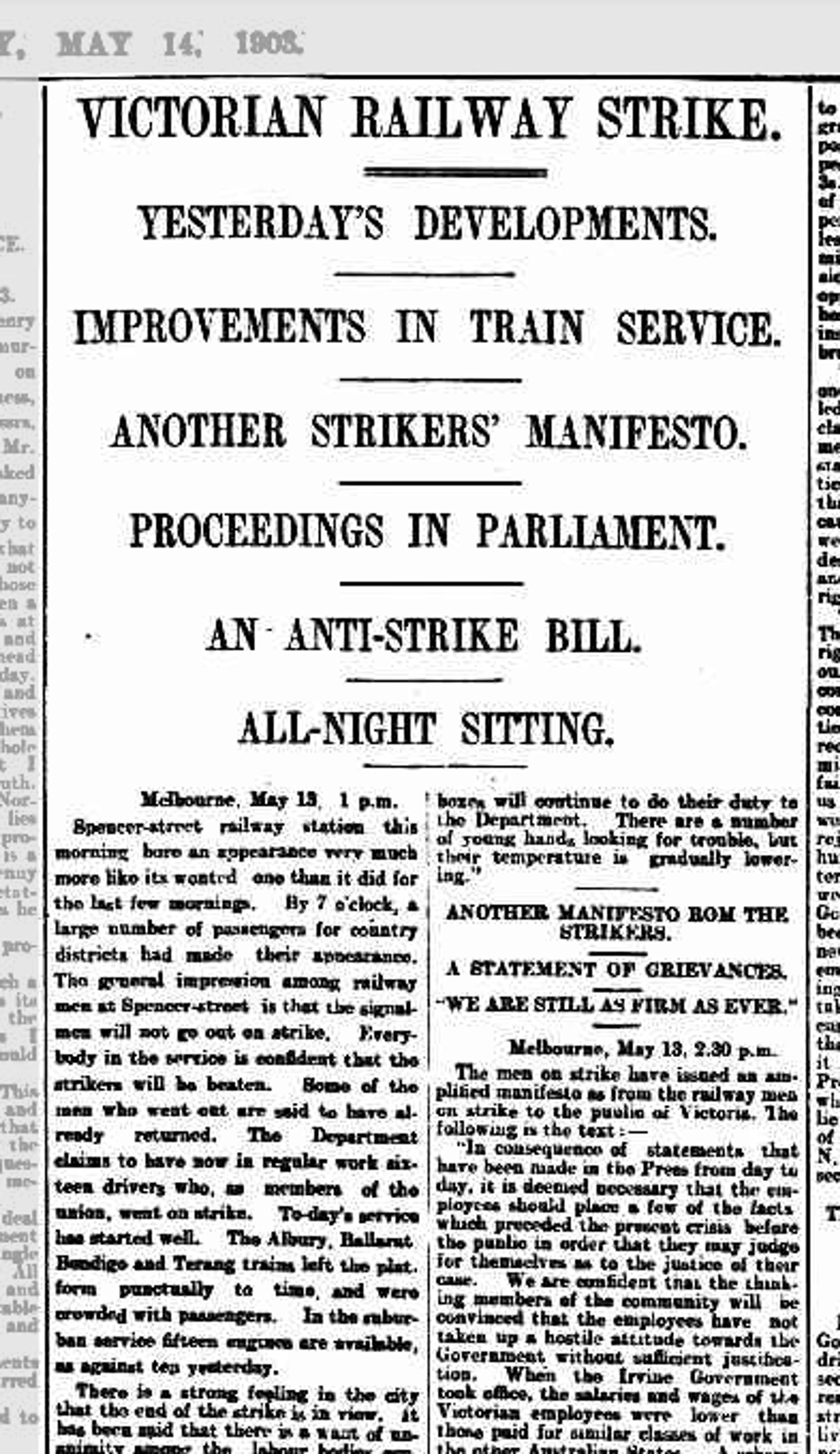
The West Australian, Thu 14 May 1903, P5. Via Trove
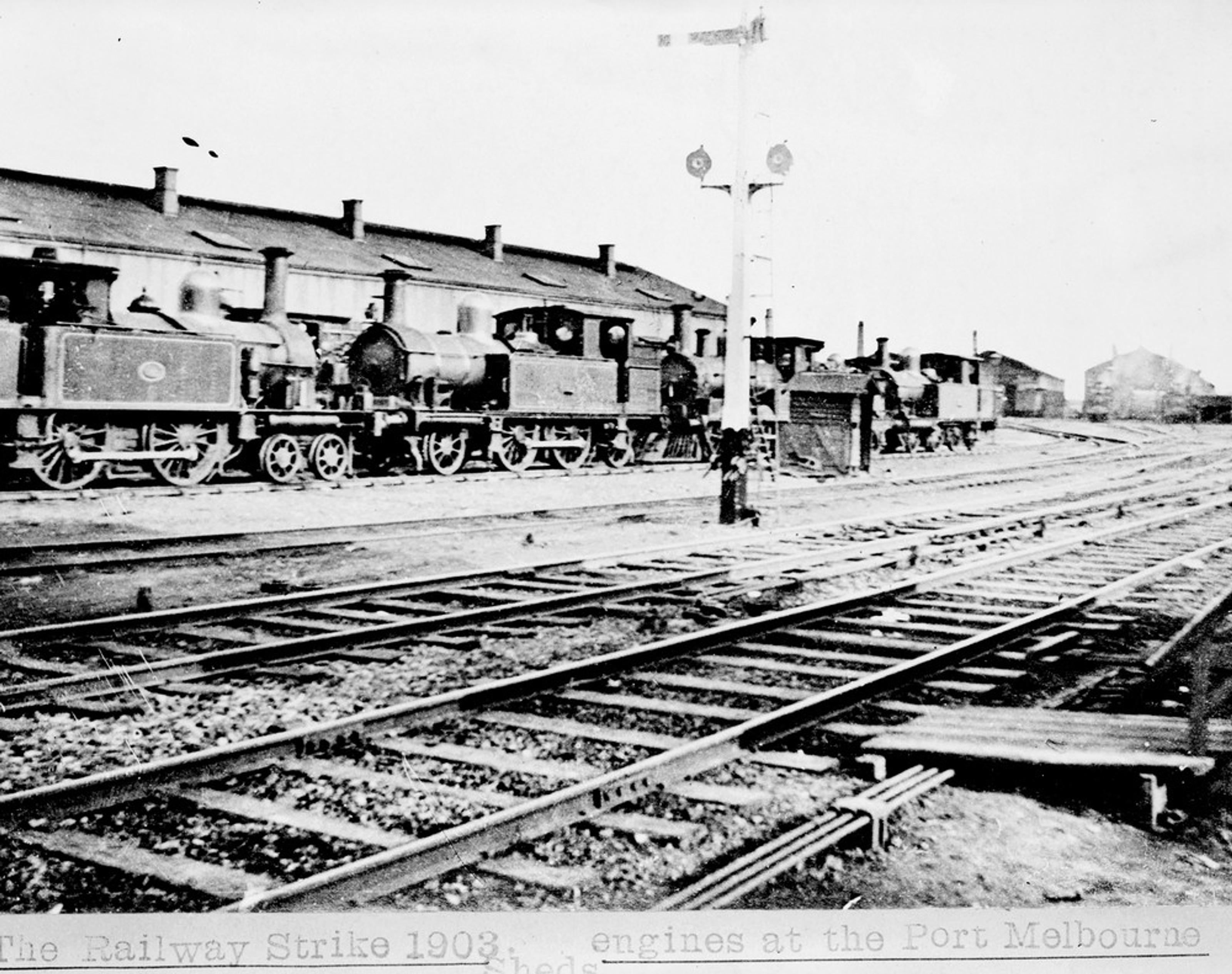
Railway Strike Steam Locomotives, Port Melbourne
The Fit Out
The new level was designed by James Fawcett, an architect and Railways Department employee who had previously won a competition to design the station.

Flinders Street Railway Station, Melbourne, 1908, Fawcett & Ashworth

Western end of Flinders Street Station
Completed in 1910, his new additions to the station included billiards and games rooms, a gymnasium and 10,000-volume library, smoking rooms and classrooms, and a concert hall—the precursor to the fabled ballroom. At the time, the rooms were said to be decorated with “tastefully framed and artistic pictures.”
Fawcett’s most famed design element was an extensive pressed metal ceiling in the concert hall, inspired by the Art Nouveau design movement. A 1990 conservation study found the work carried out in the concert hall, or ballroom, was considered some of the most diverse and extensive in any Australian public building.
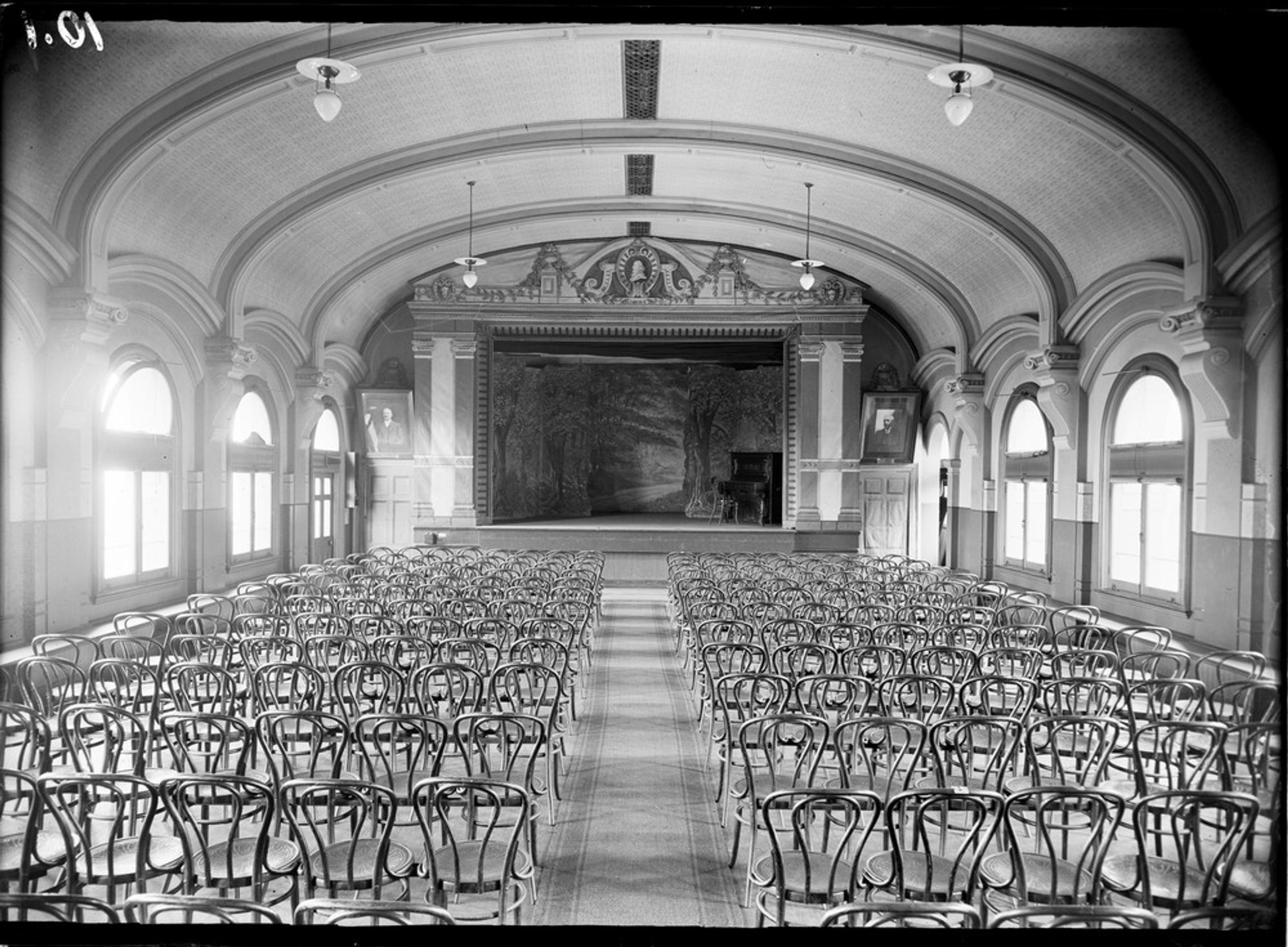
The Ballroom as Concert Hall c.1930
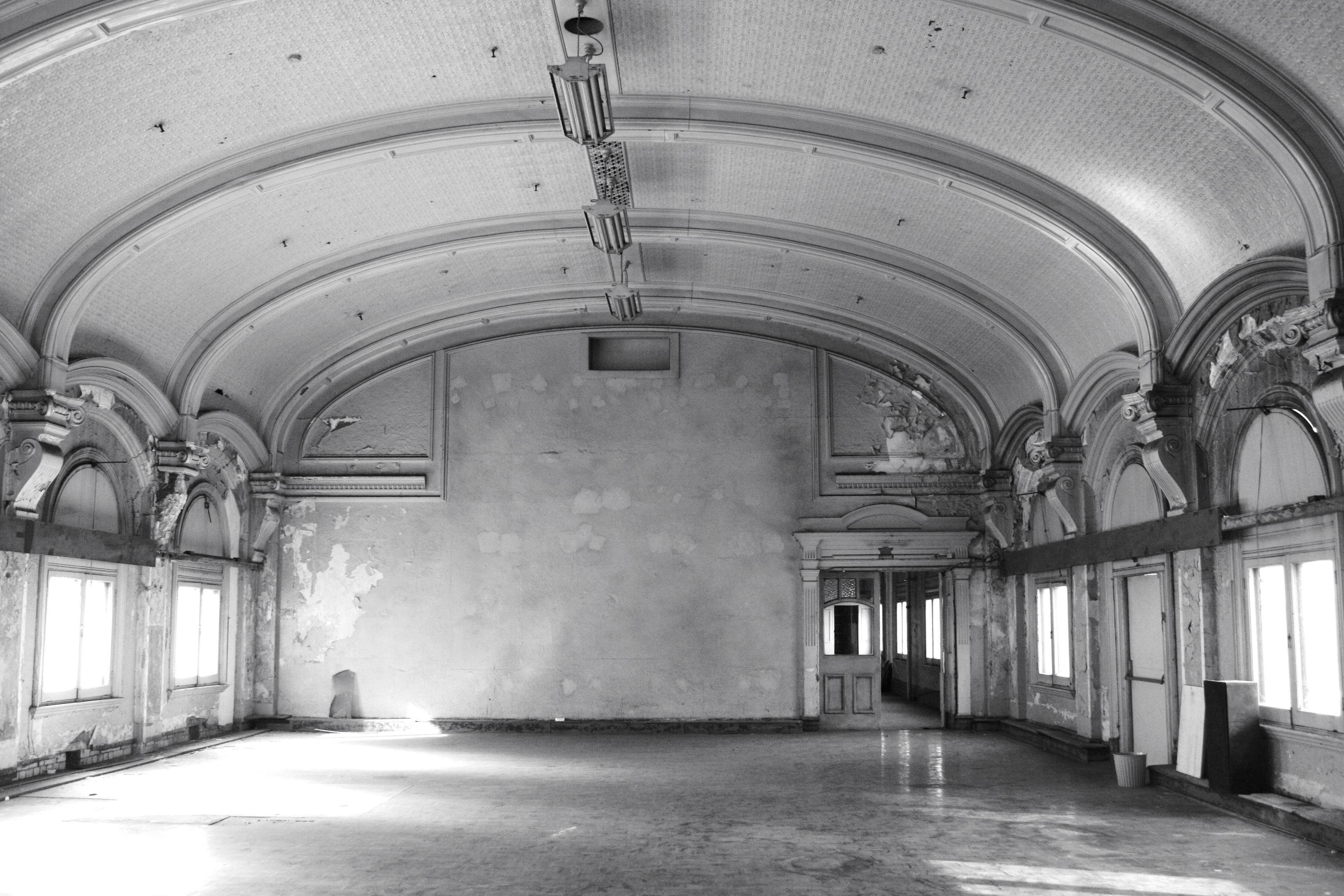
Ballroom 2008
Community
With space to gather and facilities to use, VRI members formed all sorts of community groups. An amateur dramatic society would read from scripts, music and orchestral societies took advantage of the concert hall, and sweating rail workers would box, wrestle and practice gymnastics in the gymnasium. A monthly newsletter outlined the building’s events program as well as featuring new volumes added to the library’s catalogue, from which members could have delivery arranged across the railway network.
The various clubs also used the concert hall for dances and socials. And from 1918, the VRI began converting the concert hall into what we now know as the ballroom in 1932—33, officially opening in 1934. The conversion saw the removal of the stage, making more room for dancing and space for a boxing ring for amateur bouts and wrestling displays.
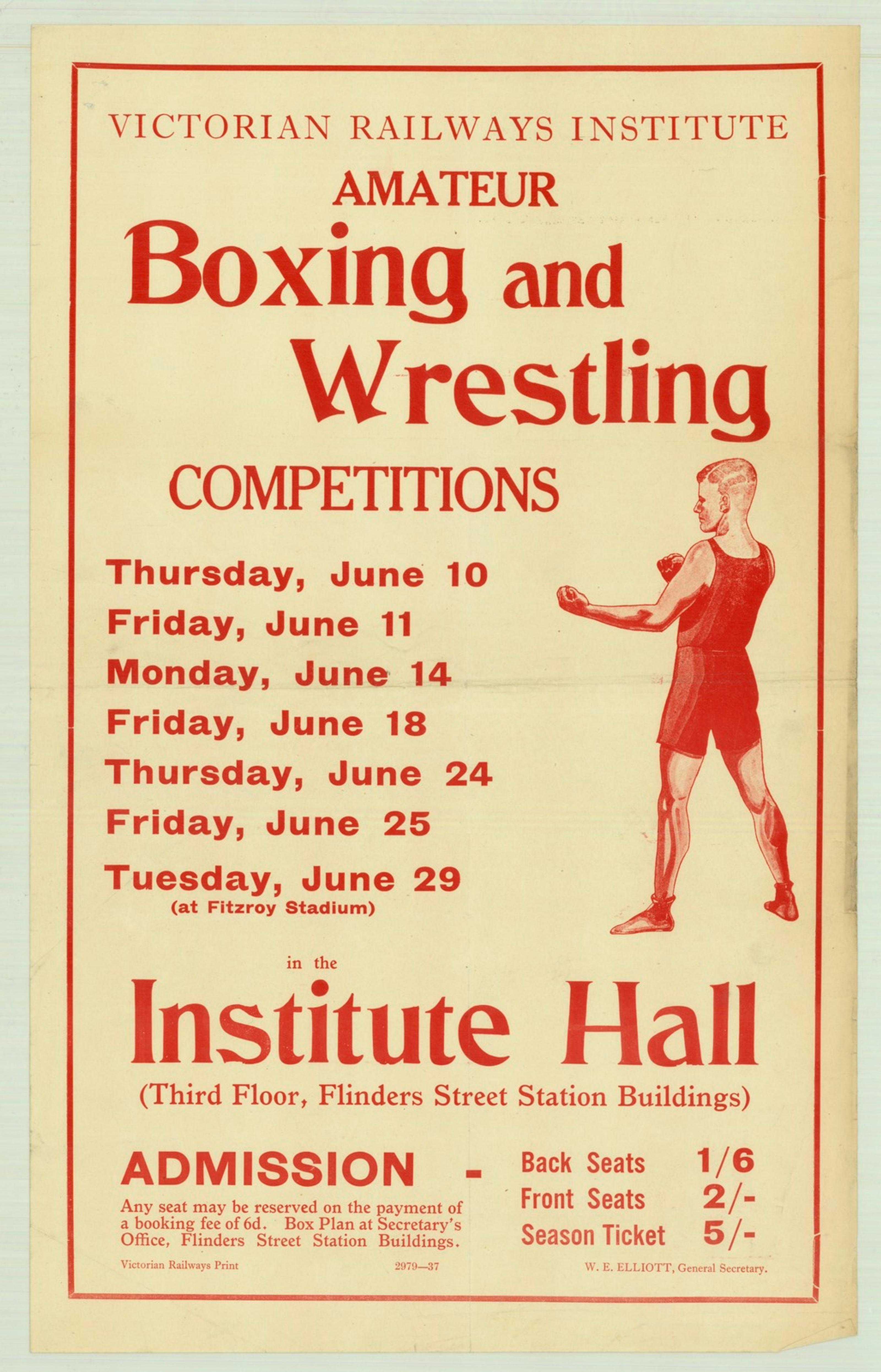
Victorian Railways Institute amateur boxing and wrestling competitions
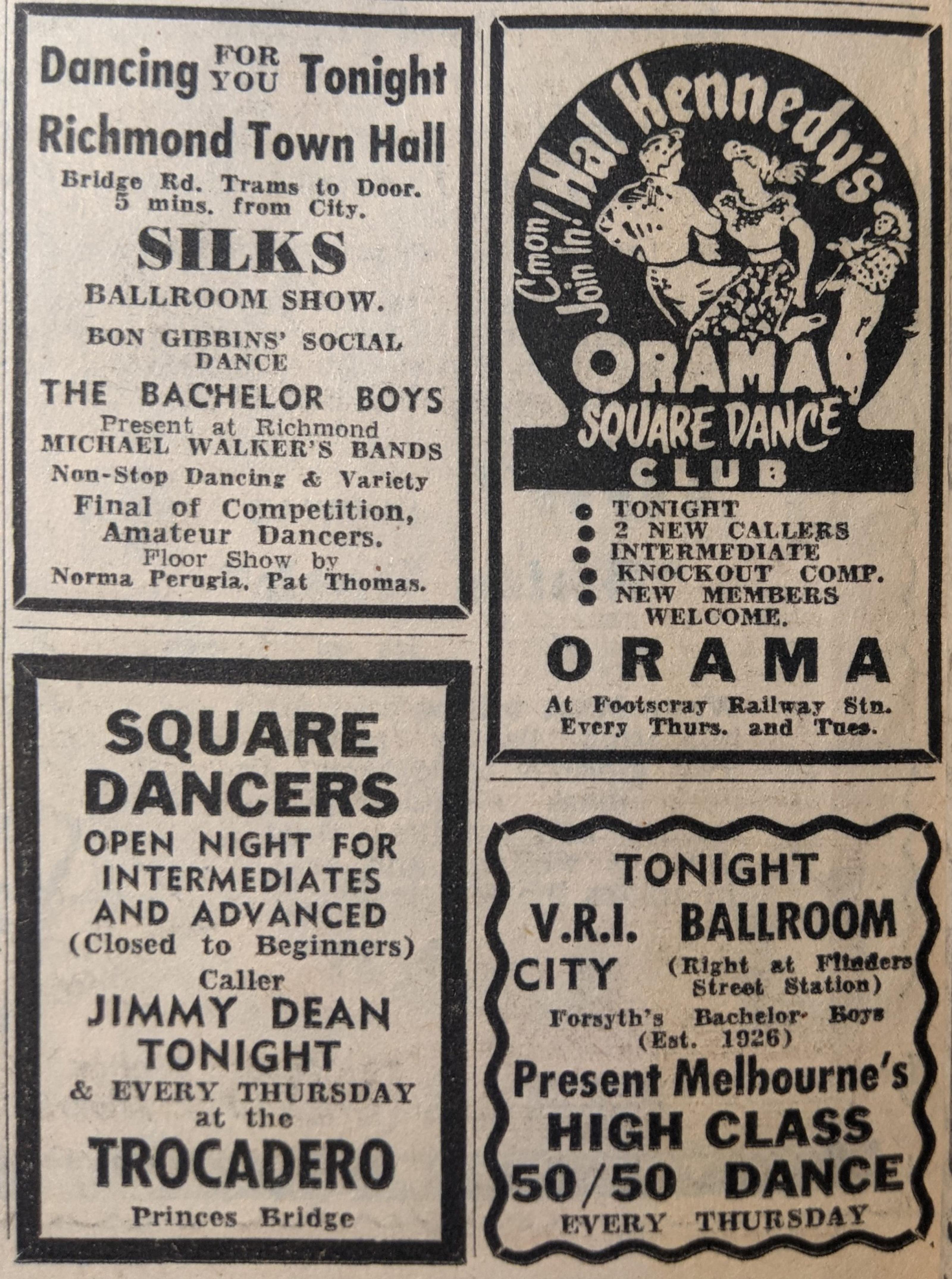
Dance advertisements, The Herald, 25 June 1953
Historian Jenny Davies describes how single men wishing to meet a date would arrive holding a box of Cadbury Roses chocolates.

Dancing in the ballroom with a band 1950s
The space became a social focal point for Melbourne, and one of the city’s largest dance venues. During the peak of social dancing in the ‘30s and ‘40s, the ballroom would host 50/50 dances. These events featured the era’s two most popular music styles, modern and old time, which were given equal room on the floor.
The venue served snacks and was unlicensed, but some attendees would head to nearby establishments for a drink. In her book, Beyond the façade: Flinders Street, More Than Just a Railway Station, historian Jenny Davies describes how single men wishing to meet a date would arrive holding a box of Cadbury Roses chocolates, in the hopes of enticing potential partners.
Decline and Reopening
By the 1970s, the popularity of rock and roll saw a downturn in interest in ballroom dancing. Many of the VRI’s rooms were now being rented by other community groups, including the Cat Protection Society and Australian Matchbox Collectors; as well as Aussie Rules Football cheer squads supporting Melbourne, St Kilda and Collingwood.
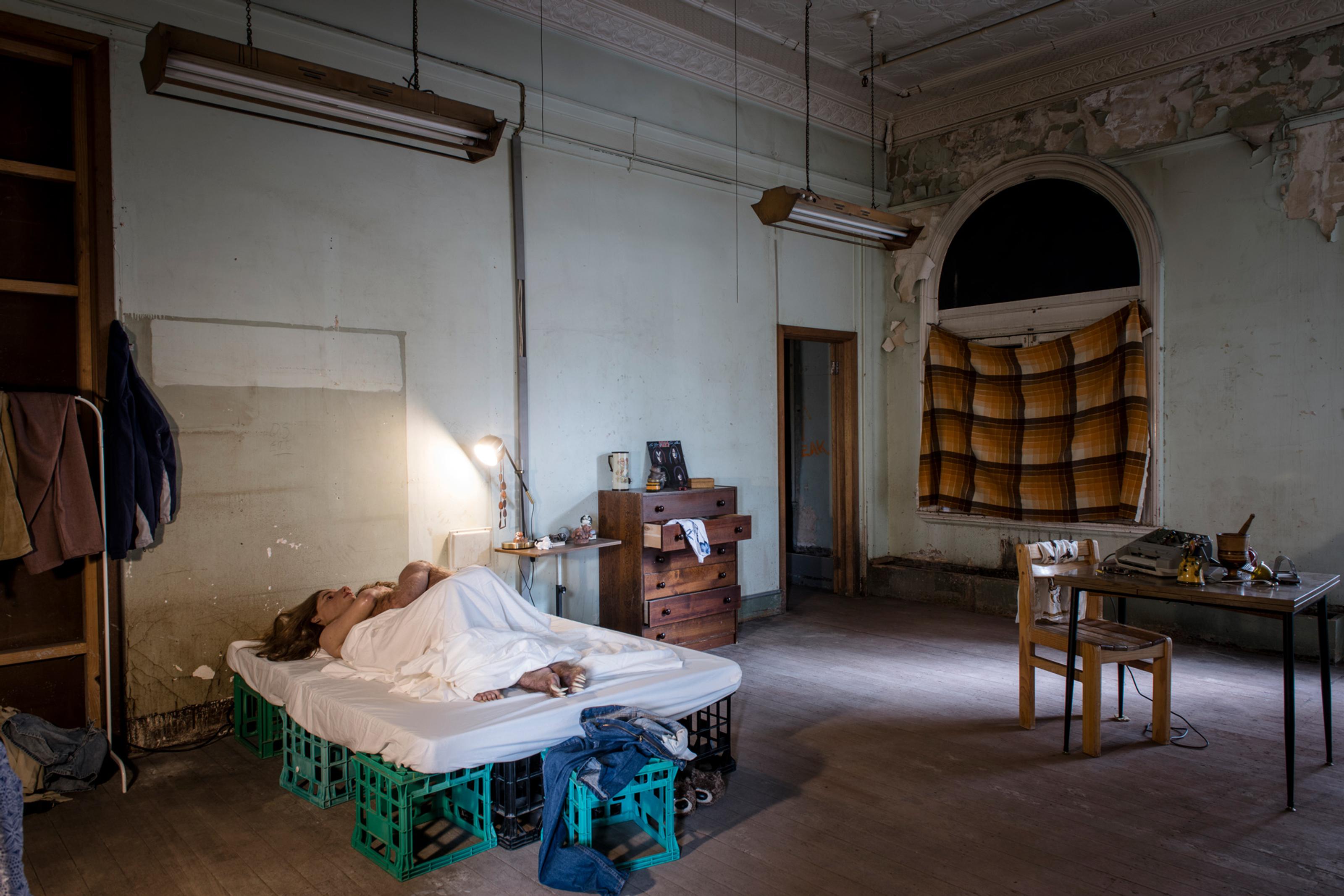
As usage of the ballroom declined, maintenance costs became unmanageable; in 1985, the VRI moved its headquarters to Flinders Street; and in 1995 most of the rooms were converted into offices (the ballroom and gymnasium were left intact)—if you look closely remnants of which can still be seen on doors and in the hallway. Leftover filing cabinets, desks and strip lighting were even used in Patricia Piccinini’s A Miracle Constantly Repeated.
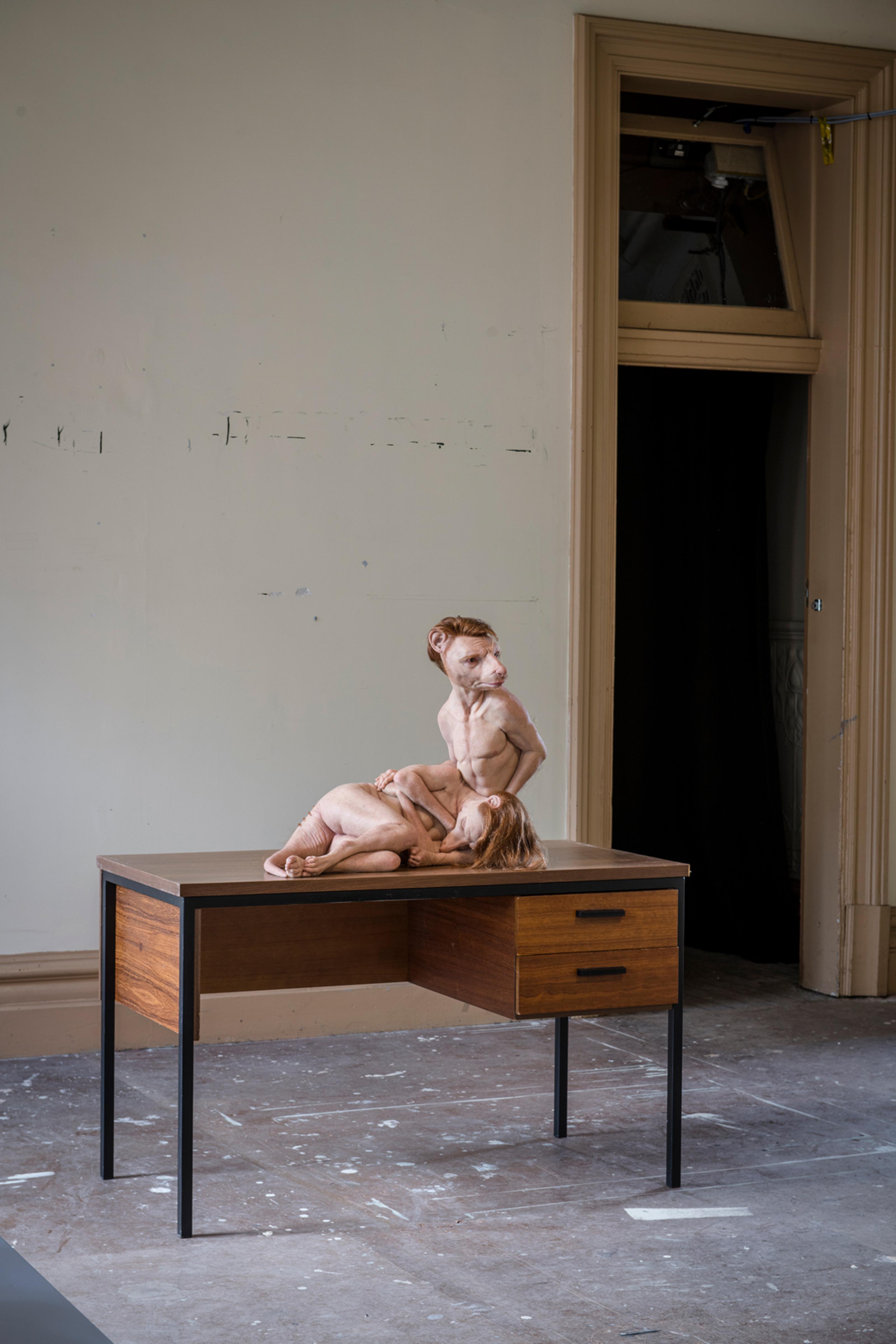
The Couple by Patricia Piccinini in A Miracle Constantly Repeated
While She Sleeps by Patricia Piccinini
The staging of the first exhibition in the Flinders Street Station rooms—A Miracle Constantly Repeated—required over two years of planning before RISING was able to set foot in the building.
Its Heritage-listed status meant the utmost care was taken to preserve the building’s interiors, including caring for its peeling paint and storing its worn carpets.
Over the years, various plans for the ballroom have been mooted, but beyond a few small public tours, including by Open House Melbourne, Flinders Street Station’s third level remained hidden from the public for 34 years. Now, as a public art space, Flinders Street Station’s upper levels and ballroom have once again become a community focal point and gathering place—one of many stories yet to come.
RISING would like to thank the State Library of Victoria and writer Blair Gatehouse for their extensive piece, “Dancing above the tracks: The VRI Ballroom at Flinders Street Station”, which was the main source for this article.
In addition, RISING would like to thank historian Jenny Davies for sharing her knowledge of the station, ballroom and upper level. You can read her extensive work in Beyond the Facade: Flinders Street, More Than Just a Railway Station (2008) available in the State Library collection.